

Every time I start a new crochet project, I get that familiar rush: excitement mixed with hesitation. I can't count how often I've admired a beautiful skein of yarn, then paused, unsure which hook would actually give me the fabric I imagined.
The wrong combo can leave your piece stiff as cardboard or too floppy to hold a shape. If you’ve been stuck there, you’re not the only one.
The good news is, there’s a simple process to land on the right choice and skip a lot of trial and error.
To answer how to choose the right crochet hook for your yarn, start with the size listed on your yarn label or pattern. Use that as a starting point for a quick test swatch.
If the fabric feels stiff, move up to a larger hook; if it’s loose and gap-filled, go down a size. Amigurumi patterns, which need tight, sturdy stitches, usually work best if you drop one or two hook sizes below what's recommended.
That one adjustment can save you time, yarn, and help you end up with a piece you’ll actually want to use or gift.
Next, let’s break down how to match hooks with yarn, tweak for different projects, and deal with those moments when the label and the pattern seem to clash.
What Size Hook Matches Each Yarn Weight?
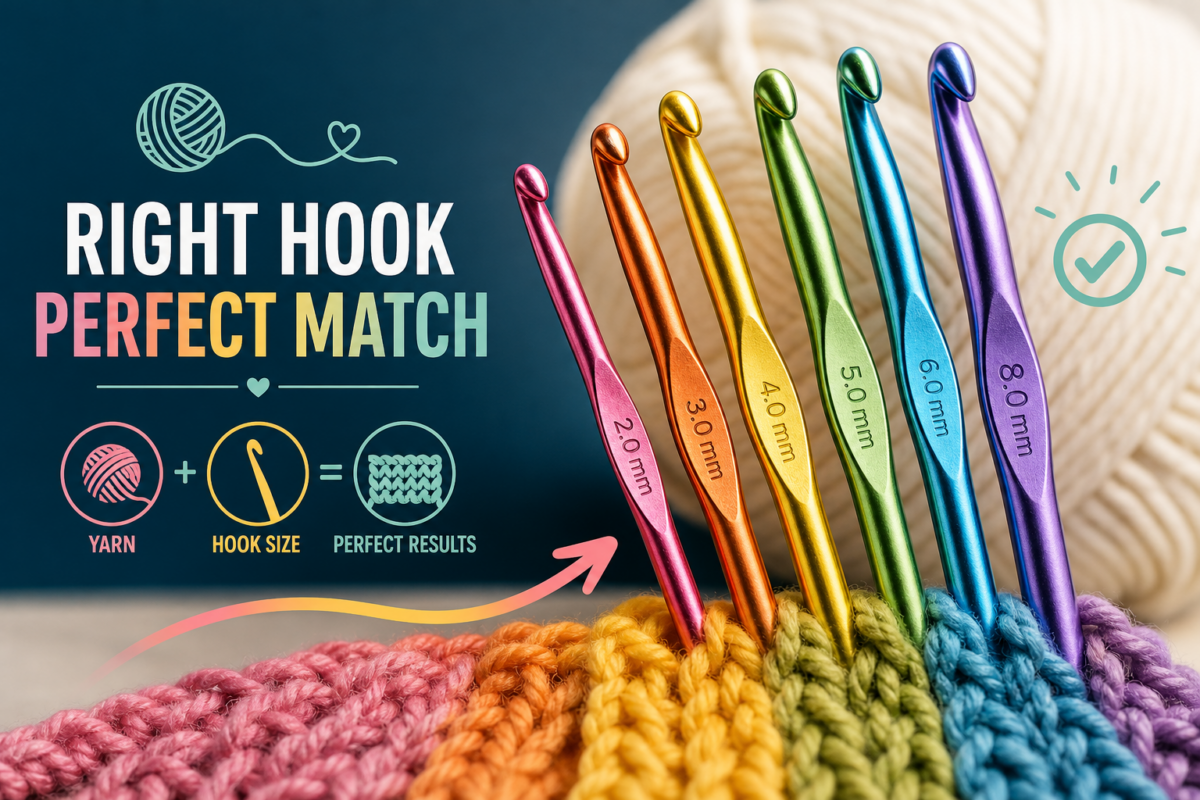
Standing in front of the yarn shelf, the first question is: which hook goes with which yarn? The answer is all about pairing yarn weight and hook size (measured in millimeters). Years of crocheters testing these combos have given us some reliable ranges.
Lace weight yarn—used for delicate, see-through projects—pairs well with hooks from 1.5 to 2.25 mm. Fingering weight matches 2.25 to 3.5 mm, a favorite for socks and light scarves. Sport weight, a bit thicker, works nicely with 3.5 to 4.5 mm hooks for lightweight sweaters or wraps.
DK (double knitting) yarn usually takes a 4 to 5 mm hook and is great for baby clothes and midweight blankets. If you want something more substantial, worsted weight yarn does best with hooks from 5 to 6 mm—think sweaters or pillow covers.
Bulky and super bulky yarns are for projects that finish fast and feel extra plush. Bulky yarn likes hooks from 6.5 to 9 mm, while super bulky yarn calls for 9 mm or larger for those dramatic, oversized stitches.
Even with these guidelines, yarns in the same category don’t always behave the same way. Acrylic worsted, for example, can puff up more than cotton, so you might need to adjust your hook size slightly.
Dica importante: If you’re not sure, start with the middle of the recommended hook range for your yarn. Your first swatch will quickly show if you need to size up or down.
Should You Trust the Hook Size on the Yarn Label?
It’s tempting to just go with whatever hook the label says. But crochet is a hands-on craft, and everyone's tension is a little different. Patterns might call for a specific look or feel that doesn’t match the label exactly.
The number on the label or in the pattern is a great starting place, but not a rule. Make a small swatch—crochet a square about ten to twenty stitches wide and a few rows tall, using the suggested hook.
Feel the fabric. If it’s rigid and won’t bend easily, your hook is too small for the yarn.
Try a bigger hook and check again.
If your swatch feels floppy or has obvious holes, your hook is likely too big. Drop down a size and try once more.
Getting your tension right is critical if you’re making something that needs to fit—like a garment or a home accessory. If your swatch doesn’t match the stitch count for the size in the pattern, adjust your hook before you commit to the whole project. That can mean the difference between a sweater you wear and one that just sits in your closet.
In my own projects, I’ve noticed even two skeins from the same brand can vary depending on fiber or dye lot. That’s why I always swatch first—it saves time and materials in the long run.
How Do You Adjust for the Best Fabric?
Once you’ve picked a starting hook size, the real work starts: testing, feeling, and making small changes. Swatching isn’t just busywork; it’s how you see if your project will turn out comfy, neat, and the way you pictured it.
Here’s my process: crochet a square with your yarn and hook. Step away for a few minutes, then come back and stretch or squish the fabric. If it feels stiff and unforgiving, switch to a larger hook for more drape and softness—perfect for shawls, sweaters, or blankets.
If your swatch is too loose or has big gaps, grab a smaller hook. Even a small change can make your stitches look a lot cleaner and the fabric feel just right.
I remember making a lightweight shawl with fingering yarn. The label suggested a 3 mm hook, but my first swatch felt heavy and dense. Moving up to a 3.5 mm hook opened up the stitch just enough to let the shawl flow and still show off the pattern.
Resumo rápido: It’s normal to test two or three hook sizes. This step helps you avoid surprises and ensures you’ll be happy with the final result.
Which Hook Size Works Best for Amigurumi?
If you’ve tried amigurumi, you know these crochet toys play by different rules. Instead of softness or drape, you want dense stitches that hide stuffing completely.
The usual approach: use DK or worsted yarn with a hook one or two sizes smaller than the yarn label suggests. That usually lands you between 2.5 and 4 mm, even if the yarn says to use 4 or 5 mm. This keeps stitches tight and makes the finished toy solid, with no stuffing poking through.
On my first amigurumi, I followed the label, and my bunny ended up with gaps all over. Switching to a 3 mm hook fixed it—suddenly the fabric was solid and neat.
One thing to keep in mind: using small hooks with thick yarn can tire your hands, especially on big projects. If your hands start to ache, try a slightly larger hook to find a better balance between firmness and comfort.
What If Hook Sizes Don’t Match Up?
Buying hooks online or inheriting them from someone else can lead to confusion. There’s the US letter/number system, UK sizes, and metric measurements, and they don’t always match. For example, an American “G” hook isn’t the same as a British one, and even brands can differ a bit.
Millimeter (mm) sizing is the most reliable way to compare hook sizes. That number is always the same, no matter where you buy your hook, so it’s the best guide for matching with your yarn.
If your hook or package lists both a number/letter and a millimeter size, always go by the millimeter measurement. And if you’re unsure what size your hook is, a simple ruler or needle gauge can clear up any doubts.
For vintage patterns or when your hook’s size has worn off, just swatch and adjust until you get the fabric you want. In these moments, your hands and eyes are a better guide than any chart.
Quick Chart: Yarn Weights and Recommended Hook Sizes
A cheat sheet can save you time whenever you’re picking a hook. Here’s a handy chart to keep nearby when you’re in doubt:
These ranges will cover almost any yarn you find in stores. Specialty yarns with unusual textures might need some extra testing, but for most projects, this chart gets you started.
Dica importante: For amigurumi, stick to 2.5–4 mm hooks with DK or worsted yarns, even if the yarn label suggests bigger. That one detail really shows in the finished piece.
Ready to Find Your Next Hook?
Choosing your hook and yarn is about paying attention and getting hands-on. The best way to get comfortable is real experimentation—try different hooks, notice what feels best, and see how your fabric turns out. There’s no single answer, and you’ll develop your own sense of what works as you crochet more.
What project are you excited to start next? Which yarn and hook combination do you want to try out? Drop your ideas or discoveries in the comments—your experience could help someone else or spark a whole new project.
Disclaimer: This article is for hobby guidance only and does not replace professional craft instruction if needed.