

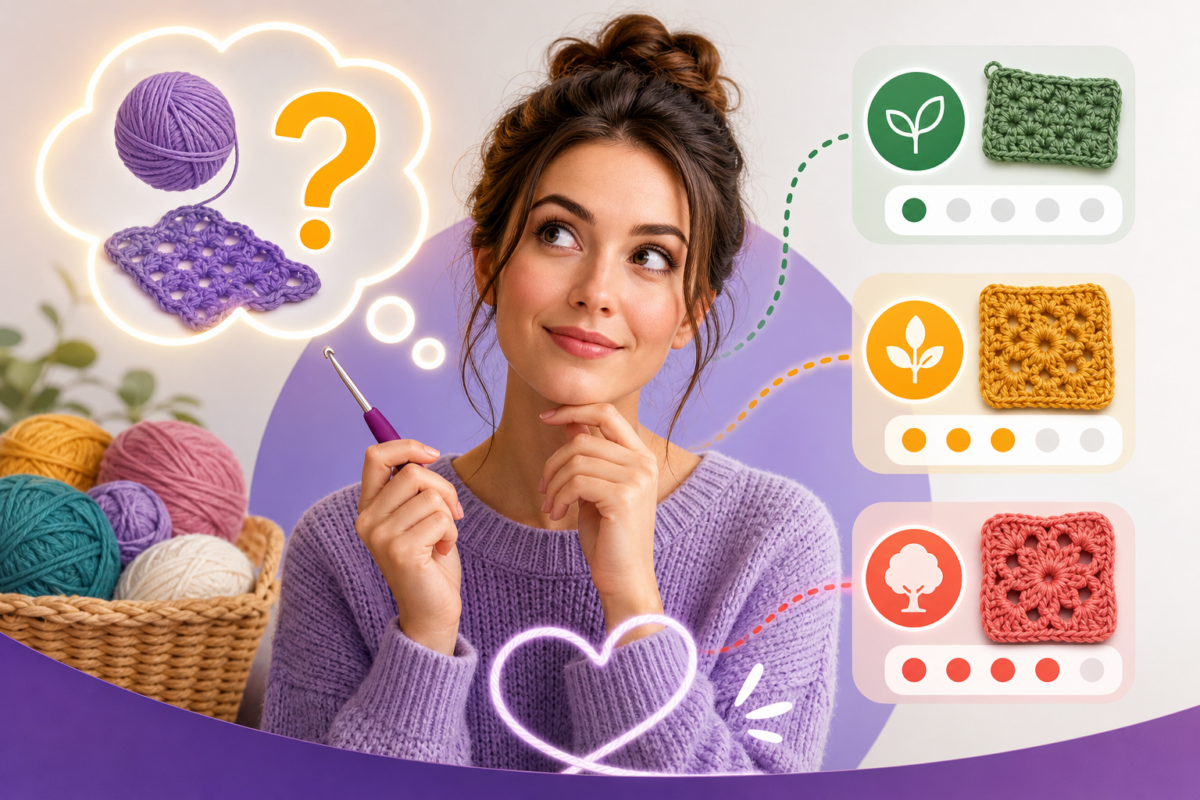
Your excitement about starting a new crochet project can hit a high, but sometimes all it takes is a few pages of free patterns before second-guessing creeps in. Is that “easy” label really for you, or will it turn into a maze halfway through?
Plenty of people dive in, only to run into confusing directions and strange abbreviations. Frustration builds, and suddenly it’s easier to leave the project unfinished than to undo hours of work.
The quickest way to find a pattern that matches your experience is to check the difficulty—Beginner, Easy, Intermediate, or Advanced—and scan the techniques, color changes, shaping, and any special notes. If you’re comfortable with slip knots, chains, single crochet, and keeping your stitch count steady, start with beginner projects like dishcloths or scarves.
That’s how you sidestep most surprises and actually finish what you start.
But sometimes, even “easy” patterns sneak in unexpected stitches, color changes, or abbreviations that make you pause. You don’t need years of practice or guesswork to avoid these traps. Being honest about your skills and reading the instructions carefully will take care of most problems.
What Do Crochet Skill Levels Actually Mean?
Most free crochet patterns use four skill levels based on the Craft Yarn Council standards: Beginner, Easy, Intermediate, and Advanced. These sound simple, but each one tells you what techniques you should know and what to expect.
Beginner patterns stick to basics like working in rows and using simple stitches—usually single crochet—with no shaping or color changes. You’ll make flat, rectangular pieces, which are perfect if you’re just learning how to crochet.
Easy patterns add a little more. You might need to change stitches in the same row, work in the round, or switch between single and double crochet. They’re not complex, but you do need to pay more attention and get comfortable following step-by-step directions.
Intermediate patterns are where things get interesting. You’ll see more complex stitch combinations, shaping with increases and decreases, and maybe some color or texture changes. At this stage, you start moving beyond flat pieces and try shapes like hats or sleeves.
Advanced patterns expect you to juggle several techniques at once: fancy stitches, lace, cables, frequent color changes, and careful attention to gauge. These are meant to stretch even experienced crocheters.
It’s important to remember that these labels are guidelines, not guarantees. An “easy” pattern can still be tricky if you’ve never made a double crochet. Matching what the pattern asks for with what you already know makes all the difference.
How Can You Tell If You’re a Beginner, Easy, or Intermediate Crocheter?
Knowing your skill level helps you avoid getting stuck halfway. If you can do a slip knot, chain, single crochet, keep your stitch count steady, and finish a simple square, you’re a beginner. That means you’re past just watching tutorials—you’ve made a few basic pieces, practiced yarn tension, and can repeat rows with confidence.
If you’ve completed a few projects, made scarves or dishcloths, and maybe created a granny square, you’re probably ready for easy patterns. You’re used to switching stitches in a row, might have changed colors once or twice, and instructions like “repeat to end” don’t scare you.
You hit intermediate level once you’re comfortable with shaping. You know what increases and decreases are, have worked in the round (like for hats), and can follow patterns that make more than plain rectangles.
The first time I tried to crochet a hat, I realized how a single missed increase could throw off the shape. It’s not just about how many projects you’ve finished, but whether you’ve practiced the new skills each level brings.
In practice, it’s smart to test a pattern a level up when you already know most stitches and steps. Take it slow—adding one new skill at a time is far better than trying to learn everything at once.
What Should You Check Before Starting a Crochet Pattern?
Before picking a pattern just because the photo looks nice, spend a few minutes going through the instructions. This saves you from surprises and having to pull out rows later. Here’s a quick checklist to keep in mind:
A beginner pattern can still be tricky if it introduces a stitch you’ve never seen, or demands perfect tension for the project to work out. If more than one thing is new to you, it’s usually better to find another pattern or practice that skill separately before starting.
Quick summary: Reading the whole pattern before you start is the best way to avoid headaches later. The challenging part is often hidden in the middle, not in the first lines or materials list.
Not every project forgives mistakes equally. The safest choices for beginners are small and simple. Dishcloths and cleaning cloths work well—they’re easy to unravel, quick to redo, and help you practice tension and counting without worrying about perfection.
Scarves are a good next step. They teach you to keep your edges straight and maintain a steady rhythm for longer stretches. If your scarf turns out uneven, don’t stress; with time, your work will improve, and you’ll still have something useful.
Granny squares are another favorite for newcomers. They introduce you to working in the round at a gentle pace. And if one goes wrong, just start a new square—no harm done.
Once you’re confident with the basics, try a simple hat. This is where you first work on shaping, learning increases, working in the round, and adjusting the fit. Even if you make a mistake, the hat can still be worn, and you’ll pick up a lot along the way.
Important tip: For your first few projects, stick with dishcloths, scarves, granny squares, and basic hats. These will build your confidence, show progress quickly, and help you avoid the frustration of unfinished work.
When Is It Time to Try a More Difficult Pattern?
Wanting a challenge is natural, but timing matters. You’re ready for something harder when you can read through the instructions and recognize almost every technique, even if you haven’t mastered them yet.
The real test is whether you understand increases and decreases—knowing how they change the shape of your work and when to use them. This skill unlocks hats, garments, and all kinds of circular or shaped projects.
A common mistake is jumping ahead just because you’re excited, without checking if the pattern uses stitches or construction you’ve never tried. If you’re looking up terms or video tutorials for every line, it’s probably smarter to practice those skills first before committing to the whole project.
In my experience, the best way to progress is to choose patterns that only introduce one new skill at a time. For example, if you haven’t tried color changes, pick a pattern that asks for just one color switch. That way, you’re challenging yourself without getting overwhelmed, and you can actually finish what you started.
How to Read and Judge a Free Pattern Like a Pro
To avoid trouble partway through, you need to really read the pattern before picking up your hook. Start by checking the list of abbreviations and stitches used. If you spot more than one abbreviation you don’t know, look them up before you begin.
Scan sections like “Techniques Used,” “Gauge,” and “Construction Overview.” These areas often hide key details—like needing to measure your work or join pieces at the end.
Detailed patterns usually include photos, stitch diagrams, or links to videos. If a pattern is just plain text with no images or extra guidance, it can be tough for beginners, even if it’s called “easy.”
Quick summary: If a pattern looks too complicated, try searching for a video of the same project or the main technique first. Watching it in action clears up confusion and helps you decide if the project is a good fit for your skills.
Ready to Pick Your Next Crochet Project?
Learning how to choose a free crochet pattern that matches your skill level isn’t just about reading the difficulty tag. It’s about knowing your abilities, understanding what you want to learn, and being honest about your comfort zone. The more real you are with yourself, the more likely you’ll finish and enjoy your project.
So what’s next for you? Will you go for a classic dishcloth, a cozy scarf, or maybe your first shaped hat? Share in the comments which pattern you’re thinking about and what new technique you want to try this time.